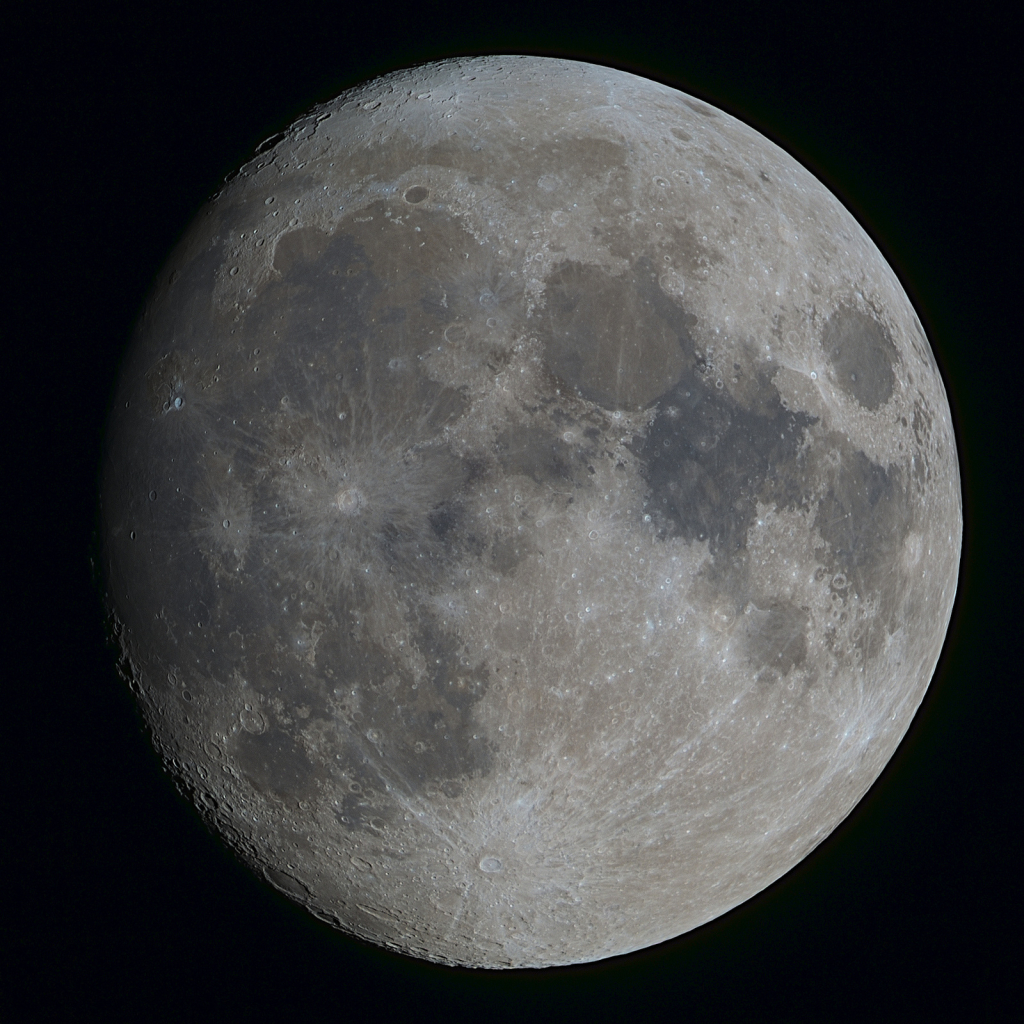
Die Aufnahme entstand bei einer Mondhöhe von nur 14° über dem Horizont bei entsprechend schlechtem Seeing, Beleuchtung 94,3 % und nahe am Apogäum mit 403.071 km Entfernung zur Erde. Dass der Mond in Erdferne steht, konnte man in FireCapture sofort sehen, da er üblicherweise den Sensor besser ausfüllt. Das ist eine L-RGB-Aufnahme mit L durch IR-Pass.
Besonders sticht bei dieser Phase Aristarchus, der hellste Krater der erdzugewandten Mondseite, hervor. Sein türkis-weißes Licht ist auffällig, aber durch den IR-Pass merklich abgeschwächt. Auf dem RGB-Bild ist Aristachus deutlich heller als Proclus, im IR sind beide eher gleich hell.
#
mond #
moon #
astronomie #
astronomy #
astrofotografie #
astrophography #
backyardastronomy

